
Micro and Nano Systems Letters · 2024
Microfabricated sensors for non-invasive, real-time monitoring of organoids
In brief
Organoids, miniature organs grown from stem cells, are becoming key models for studying disease and testing drugs, but tracking how they behave in real time is still difficult. This review looks at tiny sensors that can monitor organoids without harming them, from electrodes that record electrical activity to chemical and strain sensors, and at what it will take to combine them in a single platform.
Abstract
Show abstract Hide abstract
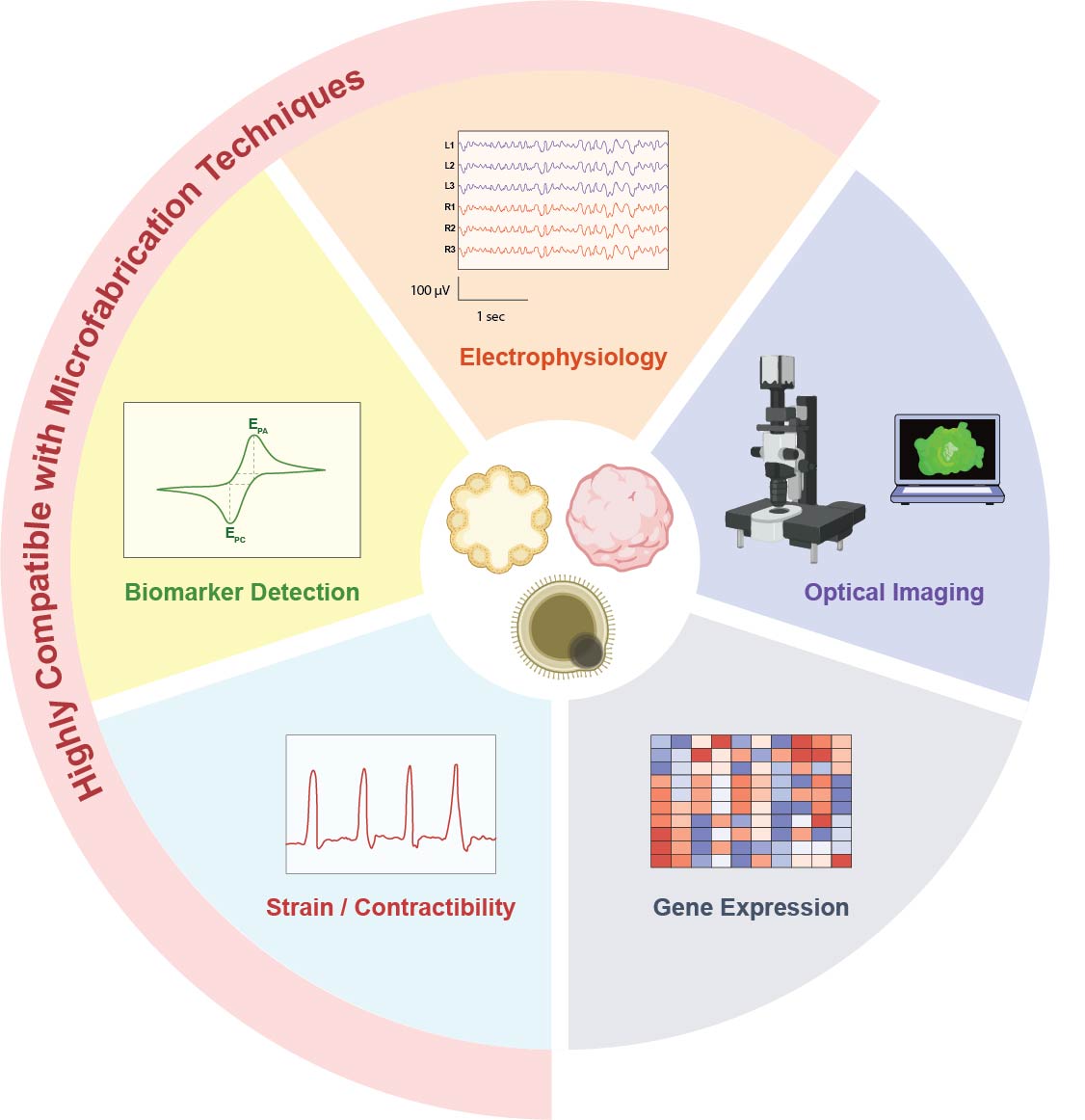
Organoids are three-dimensional cell clusters derived from stem cells and closely resemble the physiological characteristics of human tissues. As the next-generation biological model, organoids provide new opportunities for drug discovery, disease modeling, and personalized medicine. To fully harness the potential of organoids, real-time monitoring of biological states and functional evaluation of organoids are crucial. This review highlights recent advances in real-time, in situ biosensing technologies, including microelectrode arrays for electrophysiological recordings, chemical sensors for biochemical detection, and strain sensors for monitoring mechanical properties. While the development of miniature sensors for non-invasive, long-term, and real-time monitoring of organoids is in the early stage, these sensors are an essential part of organoid technology which would provide new insights into human developmental biology, pathophysiology, and drug discovery. After reviewing the seminal works on the microfabricated sensors for organoids, we also provide an outlook of the field including a discussion on the remaining challenges and future directions with a focus on integration of multiple sensors to facilitate organoid research and applications.
Cite
Kim, Y., Chica-Carrillo, E.C. & Lee, H.J. (2024). Microfabricated sensors for non-invasive, real-time monitoring of organoids. Micro and Nano Systems Letters, 12(1), 26. https://doi.org/10.1186/s40486-024-00216-y